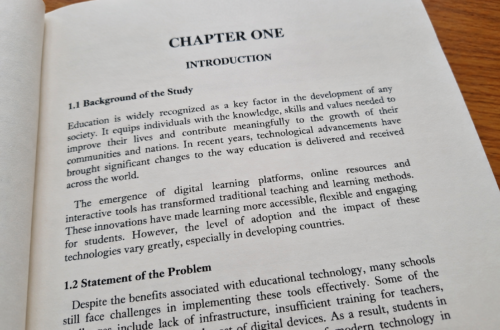
Academic writing has always been one of the most challenging aspects of higher education. Whether you are writing a final-year project, thesis, dissertation, journal article, literature review, or research proposal, the process can be overwhelming. Students often spend countless hours searching for scholarly articles, analyzing research findings, organizing references, and trying to present their ideas in a clear and professional manner.
Fortunately, artificial intelligence (AI) is transforming the way students conduct research and write academic papers. Today’s AI-powered tools can help researchers find credible sources, summarize complex journal articles, generate outlines, improve writing quality, and manage citations more efficiently than ever before.
However, it is important to understand that AI should not replace critical thinking or original research. Instead, these tools should be used to enhance productivity, improve understanding, and streamline the research process while maintaining academic integrity.
In this article, we will explore the top five AI tools every student should consider using for academic research and writing in 2026.
1. ChatGPT – The Ultimate Academic Writing Assistant
When discussing AI tools for academic writing, ChatGPT stands out as one of the most versatile and powerful options available today. Unlike traditional writing software, ChatGPT functions as an intelligent research assistant capable of helping students at virtually every stage of the writing process.
What ChatGPT Can Do
ChatGPT can help students:
- Generate research topic ideas
- Create project and thesis outlines
- Explain complex academic concepts
- Draft literature reviews
- Improve writing clarity and structure
- Rewrite and edit content
- Generate research questions and hypotheses
- Suggest methodologies
- Summarize lengthy articles
For example, a student struggling to identify a suitable research topic can ask ChatGPT to suggest relevant topics within their field of study. Likewise, students conducting literature reviews can use it to summarize and organize findings from multiple sources.
Benefits of ChatGPT
One of the greatest strengths of ChatGPT is its ability to provide instant assistance. Instead of spending hours searching for explanations online, students can receive clear and concise answers within seconds.
Additionally, ChatGPT can adapt its responses based on the user’s level of knowledge. Whether you are an undergraduate student or a doctoral researcher, the tool can provide information tailored to your needs.
Best Practices
Although ChatGPT is extremely useful, students should always verify information from reliable academic sources. AI-generated content should serve as a starting point rather than a final submission.
2. Elicit – The Smart Literature Review Assistant
Conducting a literature review is often one of the most time-consuming stages of academic research. Finding relevant studies, reading numerous papers, and identifying key findings can take weeks or even months.
This is where Elicit becomes invaluable.
Elicit is an AI-powered research assistant specifically designed to help researchers discover and analyze academic literature.
What Elicit Can Do
Elicit allows users to:
- Search academic papers using natural language questions
- Summarize research articles
- Extract important findings
- Compare multiple studies
- Identify research gaps
- Organize literature review materials
Rather than searching databases using complex keywords, students can simply ask questions such as:
“What are the effects of social media on academic performance among university students?”
The tool then identifies relevant studies and presents concise summaries of their findings.
Benefits of Elicit
The primary advantage of Elicit is speed. Instead of manually reviewing hundreds of articles, students can quickly identify the most relevant research papers and focus their attention on high-quality sources.
This can significantly reduce the time required to complete a literature review while improving the quality of the research.
Best Use Cases
Elicit is particularly useful for:
- Final-year projects
- Master’s dissertations
- Doctoral research
- Systematic reviews
- Journal publications
3. SciSpace – Making Research Papers Easy to Understand
One of the biggest challenges students face is understanding complex academic papers. Many journal articles contain technical language, complicated statistical analyses, and specialized terminology that can be difficult for beginners to interpret.
SciSpace was developed to solve this problem.
SciSpace acts as an AI-powered research companion that simplifies academic papers and helps students understand difficult concepts.
What SciSpace Can Do
SciSpace enables users to:
- Upload PDF research papers
- Ask questions about article content
- Receive simplified explanations
- Understand research methods
- Interpret statistical results
- Summarize key findings
For example, if a student encounters a complicated section discussing regression analysis or machine learning algorithms, SciSpace can explain the concept in simple language.
Benefits of SciSpace
The tool dramatically reduces the learning curve associated with academic research. Instead of spending hours trying to interpret difficult terminology, students can obtain clear explanations almost immediately.
This is especially helpful for interdisciplinary research where students may encounter concepts outside their primary field of study.
Best Use Cases
SciSpace is ideal for:
- Literature reviews
- Understanding journal articles
- Learning research methodologies
- Reviewing scientific publications
4. Consensus – Finding Evidence-Based Answers
In academic writing, claims must be supported by credible evidence. Unfortunately, students often struggle to determine whether a statement is supported by scientific research.
Consensus addresses this challenge by functioning as an AI-powered academic search engine that focuses on peer-reviewed evidence.
What Consensus Can Do
Consensus helps users:
- Search scientific literature
- Find peer-reviewed evidence
- Obtain evidence-based answers
- Identify scientific consensus on topics
- Review findings across multiple studies
Instead of simply displaying a list of research papers, Consensus attempts to answer research questions based on the available scientific evidence.
For example, a student might ask:
“Does remote learning improve academic performance?”
Consensus will analyze relevant studies and summarize the overall findings.
Benefits of Consensus
The tool helps students avoid misinformation and strengthens the credibility of academic writing by ensuring claims are supported by scholarly evidence.
Additionally, it saves significant time by providing quick summaries of scientific findings rather than requiring students to review numerous studies individually.
Best Use Cases
Consensus is particularly valuable for:
- Evidence-based writing
- Literature reviews
- Research validation
- Academic argument development
5. Jenni AI – The AI Writing Partner
Many students experience writer’s block when working on lengthy academic projects. Even after conducting extensive research, transforming ideas into a coherent paper can be difficult.
Jenni AI was created specifically to address this challenge.
Jenni AI serves as a writing partner that assists students throughout the drafting process.
What Jenni AI Can Do
Jenni AI helps users:
- Generate content suggestions
- Continue incomplete paragraphs
- Create academic drafts
- Insert citations
- Improve writing flow
- Organize ideas
Unlike generic writing tools, Jenni AI is optimized for academic writing and understands the structure commonly used in research papers.
Benefits of Jenni AI
One of its most useful features is real-time writing assistance. As students write, the tool suggests relevant content that can help maintain momentum and overcome writer’s block.
Additionally, Jenni AI supports citation integration, making it easier to maintain proper academic referencing.
Best Use Cases
Jenni AI works well for:
- Research papers
- Dissertations
- Thesis writing
- Academic essays
- Journal manuscripts
Bonus Tools Every Researcher Should Use
While the five tools above are excellent for academic writing, students should also consider incorporating the following tools into their workflow.
Zotero
Zotero is a free reference management tool that helps students organize sources and generate citations automatically.
Key benefits include:
- Citation management
- Reference organization
- Automatic bibliography generation
- Integration with Microsoft Word
Grammarly
Grammarly helps improve grammar, spelling, punctuation, and writing clarity.
It can:
- Detect grammatical errors
- Improve sentence structure
- Enhance readability
- Maintain professional writing standards
The Perfect AI Research Workflow
To maximize productivity and research quality, students should combine multiple AI tools rather than relying on a single platform.
A recommended workflow is:
Step 1: Find Research Papers
Use Elicit and Consensus to discover relevant scholarly literature.
Step 2: Understand the Literature
Use SciSpace to analyze and simplify complex journal articles.
Step 3: Develop Your Paper
Use ChatGPT to create outlines, generate ideas, and organize content.
Step 4: Write the First Draft
Use Jenni AI to draft sections of the paper and overcome writer’s block.
Step 5: Manage References
Use Zotero to organize citations and generate bibliographies.
Step 6: Edit and Refine
Use Grammarly to improve writing quality and readability.
Step 7: Check Originality
Use Turnitin before final submission.
Important Considerations When Using AI for Academic Writing
While AI tools offer tremendous benefits, students must use them responsibly.
Always remember:
- Verify information from reputable academic sources.
- Do not submit AI-generated content without review.
- Follow your institution’s academic integrity guidelines.
- Use AI as a research assistant rather than a replacement for critical thinking.
- Properly cite all sources used in your research.
Most higher institutions increasingly recognize the value of AI-assisted learning, but they also expect students to demonstrate original thought and scholarly rigor.
When combined with citation management tools like Zotero and editing tools like Grammarly, these AI platforms can significantly simplify the research process from start to finish.
However, success in academic writing still depends on critical thinking, careful analysis, and ethical research practices. AI should be viewed as a powerful assistant rather than a substitute for genuine scholarship.
Students who learn how to leverage these tools effectively will be better equipped to navigate the demands of modern academic research and produce work that meets the highest scholarly standards.
One of our main objectives is to help students and reseachers get their desired academic write-ups.
If have a final-year project, these, dissertation, grant or reseach proposal to write, but you need a professional touch, you want to meet your submission deadline, or you are too busy to handle it, count on our team to deliver it at your chosen time.
Kindly contact us on Whatsapp +2348029922498
FAQs
How Do I Validate a Research Instrument?
ANS: Seek expert review from supervisors or specialists, conduct pilot testing before the main study and revise unclear or ineffective questions.
What Is Reliability in Research?
ANS: Reliability refers to consistency of results. A reliable instrument produces similar outcomes repeatedly and reliability is often measured statistically.
How Do I Analyze Research Data?
Organize data systematically, use appropriate statistical tools and interpret findings according to research objectives.